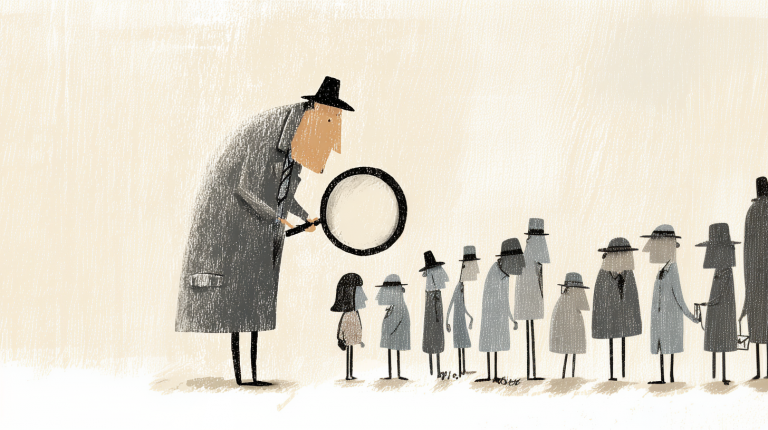
The Essential, Surprising Truth About AI and Jobs
Bruce speaks with Daniel Susskind, economist and professor of business at Gresham College.
He discusses how AI is changing work, education, and the meaning of our jobs.
Daniel’s new book tackles AI and how we should prepare for the future.
Predictions of the future show it is too uncertain to predict. Moreover, he says we should prepare by learning the basics. He also urges training on cutting edge technology and teaching the essentials of character.
We also discuss Ethan Mollick’s posts on AI.
AI2027 updated, Reddit post. AI2027 gives a positive vision of what is next.
It’s an important, timely discussion.
Transcript
Bruce (02:33)
Daniel, thank you so much for joining me. I wonder if to kick off, you could just introduce who you are and what you do.
Daniel (02:38) Sure, my name is Daniel Suskind. I am a writer and an economist. I am the current professor of business at Gresham College. My work spans policy, technology, and the transformation of work. Over many years I have studied how organisations adopt new tools and how societies respond to rapid change.
I have spent the last ten to fifteen years examining the impact of technology. Artificial intelligence affects work and society. I have looked at how teams collaborate, how firms restructure, and how individuals navigate new risks and opportunities.
My most recent book represents, in many ways, the culmination of much of my work. It asks how children can thrive in an age dominated by AI. The title is What Should My Children Do? How to Flourish in the Age of AI.
Bruce (03:13) And I want to try to take in all of those things. Over the course of the last 12 months, a question you have been addressing, a series, I think you have done three lectures of public lectures talking about AI. You might have done more; correct me if I’m wrong. But I have shared those along the way as really thoughtful contributions to the debate about what our jobs will look like in the future. What will our jobs look like pretty much in the present?
Daniel (03:36)
Yeah.
Bruce (03:36)
And so, you know, to sort of hit you with a very broad opening question, what do you see the state of play of AI and our jobs looking like? Are we about to be replaced?
Daniel (03:47)
So my my view, and it has been the view for some time, is that the main challenge we face in the world of work is not that there aren’t going to be enough jobs. you know, for now, I think the main challenge is that there are jobs, but for various reasons, people might not be able to do them. and so I spend a lot of my time at the moment thinking about you know how we can prepare the next generation for these jobs that are going to have to be done.
Daniel (04:16)
that said, I do think though, as you push further into the 21st century, and if you take seriously some of the claims of the large AI companies at the moment that within five to ten years we might build systems that can, you know, outperform human beings are all economically useful tasks that they do, then you have to take seriously
Daniel (04:35)
Other possibilities where the challenge might change from being one where there are jobs but for various reasons to one where there aren’t enough jobs to be done full stop. I again, I don’t think that’s the challenge for now. but I think you know, the consequences for how we work and live together in society would be so significant that even if you think it’s very unlikely, it still should be demanding more of our attention than it does today. But
Daniel (05:04)
As I said though, that’s not the main focus of my work at the moment.
Bruce (05:07)
What was really struck by was that I guess, you know, as long as 15, 20 years ago, Ken Robinson, educator was talking about the education system wasn’t fit for purpose. And specifically, he was talking at the time about, you know, bringing more creativity, bringing more sort of expansive thought into kids education. Your conclusion, though, is something different here. And there was one bit I was particularly taken by, which you said,
Bruce (05:32)
AGI should require us to shift the focus of education away from building workplace competence towards cultivating personal character from what people know in their heads to who they are as a person. And that strikes me as incredibly necessary, but wow, like such a formidable task that
Daniel (05:51)
Yeah, of course.
Bruce (05:51)
the education system will try and instil, I guess, pillars of character inside people. How would you seek
Daniel (05:54)
Yeah. Yeah, I mean
Bruce (05:57)
to do that?
Daniel (05:58)
I I suppose the the basic challenge here, which is what this new book is all about, is just the extraordinary uncertainty that we face about the future. it is very hard to predict what jobs are going to have to be done, and it is very difficult to anticipate as a result exactly which advanced skills are going to be most valuable and important.
Daniel (06:23)
Yeah, almost every day we hear stories of systems and machines taking on tasks that, you know, until recently we thought only human beings alone could do. Tasks that require, as Ken Robinson is saying, creativity, tasks that require judgement, tasks even that require empathy. Right? You know, the the sort of
Daniel (06:38)
The the idea that we can anticipate exactly which advanced skills are somehow out of reach of automation, I just don’t think we can do it any longer. You know, the the age of AI that we’re entering into is more than anything an age of uncertainty. And so for me, what I think is the question we’ve got to be answering is not how do we think more cleverly and deeply about the future than we have before and try and peer further into the crystal ball than others might have done, but instead how do we take that uncertainty as given?
Daniel (07:08)
And how do we prepare the next generation to flourish in a future that actually we know very little about? you know, we really only know two things about it. One is that it’ll be full of technologies that are more capable than those that exist today. And two, we actually don’t know much else. and that feels quite sort of dispiriting and quite disinclined yeah you know, uninspiring and worrying. But actually I think there’s a huge amount that we can do. So
Daniel (07:29)
You know, one thing for instance, and this rubs up against perhaps the Ken Robinson idea, is actually rather than try and predict which advanced skills are going to be important, creativity, judgement, empathy, instead I think we’ve got to get back to basics. I think we’ve got to focus again in education on things like literacy, numeracy, and critical thinking. Because, you know, however the future turns out, and whatever advanced skills do turn out to matter, we know that those basics
Daniel (07:58)
Are going to be crucial. You know, they’re basic not only in the sense that they’re the simplest, but they’re also the building blocks, the foundations for all other skills that you might develop later in life. You know, you can’t be a creative person if you’re an illiterate, innumerate, or uncritical thinker. You know, you need those basics in place. And so this the spirit of you know, one theme of the book is let’s stop trying to predict those advanced skills. Let’s focus instead on getting back to basics. But
Daniel (08:25)
The the reason the shift from, I think, what I call competence to character becomes important is because, you know, we we don’t at the moment face a world with AGI, a world where systems can outperform us at all economically useful tasks that we do, far from it. But, you know, what would the consequence of that be for how we live and work together? Again, you know, it’s just so extraordinarily uncertain. and
Daniel (08:50)
That’s the spirit of that observation, which is that if we are heading towards a world with these extraordinarily capable technologies, focusing far more on the sort of person that you are and the character that you have as you move through this increasingly uncertain, ever-changing, thrilling, but also unsettling world becomes more and more important, it seems to me. And trying to predict what particular competencies are going to be most valuable and important.
Daniel (09:16)
seems to me to just be a a more and more difficult task. So, you know, again, I don’t think that shift from competence to character is a shift necessarily for now. I think there are more, you know, more straightforward things that we can do right now to prepare the next generation, which we can all agree upon. But I do think again, as you peer further into the twenty first century, you do have to take some of these other ideas more seriously. And one of them is the shift from competence to character.
Bruce (09:42)
more locally then in the short
Daniel (09:43)
Yes.
Bruce (09:44)
term, what do you think organisations should be doing then? So you raise that, that thing that actually we’ve been incredibly bad at predicting. a decade ago, as recently as a decade ago, probably as recently as five years ago, if we’d have asked anyone how to prepare for the future, then learn to code was the,
Daniel (10:01)
Right, that’s exactly right.
Bruce (10:03)
was the sort of the suggestion that, know, the suggestion, well, if you learn to code, there was Organisations who trained executives, how to understand to see the world in code. And it felt like the one way to future proof your own self was
to add that capability. Well, it’s proved just about to be the least valuable other than sort of the teaching you the discipline of thinking, but it’s been proved
Bruce (10:29)
to be a bad prediction. And I guess that’s the reason why you say no one knows anything that these predictions in themselves have no value.
Bruce (10:36)
Is that why your view is you’ve got to sort of teach both the framework of the future and the best of the old traditional methods? You can have a foot in both camps because no one really does know.
Daniel (10:48)
Yeah. So I I I think the the exactly as you’re saying, the technological changes of the last few years are a death knell for the idea of future proofing. We just can’t do it. We just cannot predict what jobs are going to matter and what skills are going to be most valuable and important. And exactly as you say, I think coding is just the most you know sobering example. Two thousand thirteen, the then Prime Minister David Cameron says, you know, and it’s radical, it’s exciting, it’s bold.
Daniel (11:17)
Every child in primary and secondary schools up and down the country is going to learn to code. Michael Gove, then the education secretary, says, these are the technical skills that the next generation need to flourish in the 21st century or something along that. And you know, they weren’t alone, exactly as you say. It was very hard in the years that followed to find a sort of advanced progressive country that didn’t embrace some form of teaching people to code as part of their AI strategy. So I think Finland, for instance, which is famed for its
Daniel (11:47)
educational prowess dropped long division from their national curriculum in order to make way for coding. And as you say, exact you’re exactly right that it also seeped into the corporate setting too. This was thought to be something that not just young people but people later on in their career needed to learn to do in order to flourish. Now I’m I’m labouring the punchline because everyone knows it, which is that in 2023, what does it turn out that these generative systems are particularly good at doing?
Daniel (12:13)
Not just not just quite good at doing, but what they’re best at doing, writing code. so it turned out that a set of skills that were meant to last the next generation, you know, really for the the rest of their lives barely lasted until they left school. And I don’t think this was a case of bad luck. I think it is an example of how just incredibly difficult it is to anticipate what advanced skills are going to be most valuable and important. And so one thing that I say is look, what we’ve got to do is get back to basics and you know, I’ve
Daniel (12:42)
Again, literacy, numeracy and and critical thinking. But we’ve also got to teach people to use these technologies. And I think this is incredibly important. Yeah. The o if the if there is anything we know about the future, it is that our lives are going to be saturated with technologies that are vastly more capable than those that exist today. And just to give you a ballpark for the sort of ambition that I think we ought to have in mind, I really do think we ought to be spending about a third of our time now, primary, secondary, university, professional settings.
Daniel (13:11)
Training people to use these technologies. I mean, there’s two things to say though. One is that it’s not enough just to teach people to use them. We’ve also got to teach them to use it critically. you know, these systems are not perfect. They hallucinate, they make mistakes, they exhibit biases. and if we are simply passive recipients or passive users of these technologies, taking what they tell us at face value, we’re going to, you know.
Daniel (13:36)
find ourselves embarrassed time and again. You know, and you can see this, you know, consulting firms publishing you know, decks with made-up case studies of businesses that don’t exist, lawyers relying on hallucinated cases for their you know, legal reasoning. I saw a a newspaper which published a a list of books to read this summer where some of the books didn’t actually exist. You know, it’s an example of people using the technology but not using it critically.
Daniel (14:01)
The computer scientist Jeffrey Hinton has this great phrase where he says that AI today is an idiot savant. You know, it is extraordinarily savant in the sense that it is capable of just complete genius. And we’ve seen in the last few weeks, particularly in mathematics, the way that these systems just seem to be steamrolling through many of the frontier problems in mathematics. The most recently the Navier Stokes problem, one of the Millennium Prize problems, which if you solve it, you get a million dollars. It’s extraordinary.
Daniel (14:29)
But at the same time, only a few months ago, this same system wouldn’t have been able to count the number of R’s in the word strawberry. You know, and so there’s a really important task that falls to us to, you know, engage with these systems critically. And so that I think is again, you know, one of the really important things, particularly in the corporate setting, to make proper use of these technologies. I suppose there’s another big challenge, and this is perhaps more for the educational system than
Daniel (14:54)
corporate setting, but I think it’s still important too, which is look, Daniel, you’ve said you you want to nurture the basics, but you’ve also said you want people to use AI. Aren’t those two things in conflict? Aren’t you going to undermine the basics by encouraging people to use AI? you know, why would you bother learning to do a difficult calculation if ChatGPT can do it for you in a few seconds? Why, you know, take the time to learn the discipline of sitting with a difficult book.
Daniel (15:24)
If Claude can answer any question you have under the sun. You know, that there is a fear today, and I think it’s a legitimate one, that the way we are currently using these technologies risks making us stupid. And I think that is a real risk. So, you know, again, another big practical challenge for us is well, how do we teach people to really use these technologies without also undermining the basics? How do we teach them to flourish with AI and also to cope without it?
Bruce (15:49)
it begs a really interesting question about sort of where education should start and finish. And exactly you’ve talked, you know, what should our children learn about how the education system can deal with this. But for the next two decades, the majority of the
Daniel (16:01)
Yes.
Bruce (16:02)
AI usage that’s going to happen in work is not going to be by these new recruits joining the workforce and then gradually by us, most is sort of changing our approach, which by the installed basis that people are already
Daniel (16:14)
Yes.
Bruce (16:15)
doing jobs.
Bruce (16:16)
There’s a really interesting example in Ethan Mullick’s book where he talked about recruiters and he talked about
Daniel (16:20)
Yes.
Bruce (16:21)
recruiters who were now gifted the ability to use AI tools. And what worked in aggregate is that even though the ability to filter between candidates to find better matches was generational way more powerful than any previous group of recruiters had ever done, it actually made the job less satisfying. It made the experience for candidates worse.
Bruce (16:43)
And actually in aggregate, because there’d been no sort of plan about how to do these things upfront, actually everyone ended up poorer. The candidates, the recruiters, everyone ended up worse off. And it sort of posed a really interesting question that, you know, there’s one thing educating children about how you’ll be able to do these things in the future. But I guess there’s system of education that needs to be done that needs to be educating bosses, workers, people right now, how to apply.
Bruce (17:11)
this rapidly evolving technology in the jobs that they’re already doing.
Daniel (17:16)
Yeah, I think that’s right. And and when I say it’s a really interesting example, the the recruitment one, that in a sense what you have is an efficient a more efficient system that leaves everyone feeling less less well off,
Bruce (17:28)
Mm.
Daniel (17:28)
as you say. and again I’d come back to this phrase which I I find myself using again and again, which is to to we’ve got to use AI critically.
Daniel (17:39)
and that means not simply in the sense of, you know, that it hallucinates, exhibits biases, that it makes things up and we’ve got to always take things at face value, but also in this deeper sense, which is that it’s not always going to be the case that more AI is necessarily better in all the dimensions that you’re talking about. And there is at the moment in the rush to adopt and use AI, precisely the kind of you know.
Daniel (18:05)
unfortunate consequences that you’re talking about. I am sure there is another path where we we find a way to use these technologies and, you know, improve the recruitment system that doesn’t leave everyone feeling you know less less well off. It’s just at the moment, in this kind of very, you know, rush to use this extraordinary technology that’s changing all the time in a feeling like we’ll be left behind if you don’t, that we are
Daniel (18:27)
we’re we’re not being critical enough in how we use it.
Bruce (18:30)
When you’re looking at the messaging that comes to us right now and there’s so
Daniel (18:33)
Yeah.
Bruce (18:34)
much noise about AI, you know, for a lot of people they have this sort of dissonance where their
Daniel (18:39)
Yes.
Bruce (18:40)
only experience of AI right now is co-pilot at work that
Daniel (18:44)
Yes.
Bruce (18:44)
pretty much fails to do most of the things they ask it to do and yet
Daniel (18:48)
Yes.
Bruce (18:49)
they see the turn on the evening news to be told that…
Bruce (18:52)
robot overlords will probably be seizing power within the fortnight. And so they’re sort of, they’re confronted with this contradiction where they’re like, you know, it can’t even take notes, minute notes properly for the meetings I’m in. when you’re looking at that, do you look at it thinking, the other thing that I felt was that, you you, might read something like AI 2027, which was the, the Daniel Kukatagelow predictions of where AI is going to be. And it describes.
Bruce (19:18)
human life being snuffed out by the end of the decade. And,
Daniel (19:21)
Yes.
Bruce (19:22)
and actually a lot of the predictions in that the dodgy predictions, if you go and you look at them and I think he’s tracking them on his website, they’re largely on track for what he originally said. But you know, we find ourselves thinking that we’re hearing messages that suggest that AI is all powerful and yet we don’t necessarily see it. So it makes it even more difficult to, to accept, to take on board.
Bruce (19:47)
What’s your personal perspective on that?
Daniel (19:49)
Yeah, I mean lot lots of views on this. I mean, I dissonance is such a good word. it’s exactly right, which is a sense that we feel pulled in two very opposite directions. And I mean i in a sense it’s not surprising that this technology has both a promise, or as you s you as you put it, a sort of perceived promise, and also a tremendous price. you know, almost every great technology of the last century has had
Daniel (20:13)
This, you know, two-faced nature to it. Nuclear is the great example, right? On the one hand, you have nuclear weapons, a catastrophic thing. On the other hand, you have nuclear energy and the promise of resolving, you know, environmental challenges. And, you know, the the the challenge for us, yeah, again and again has been how do we contain, mitigate the risks, take advantage of the benefits, and you know.
Daniel (20:39)
We’ve done quite a good job of that with nuclear. Let’s see what happens with AI. I mean, I I the w one observation I would make about AI though is, and again, you know, I’ve been working in this field for the last 10 or 15 years and I’ve seen various waves of kind of cascades of excitement and optimism and you know, disappointment and disillusion. And and I think the challenge for all of us is to try and not get too distracted by the sort of the ripples on the surface.
Daniel (21:06)
And instead to try and understand the kind of deeper currents that are unfolding. And for me, you know, stepping back and trying to see those deeper currents, it’s one where these technologies are gradually but pretty relentlessly becoming more capable. You know, yes, there are, you know, disappointments and and frustrations,
Daniel (21:23)
I often think of my late grandfather who had a bad experience with Skype you know in sort of two two thousand and nine or something with me. And you know that for him that was the end of video conferencing. It was just never it was you know, we’ve got to try and step back and see the bigger picture that we’re only really in in the foothills. I mean on on the question of the last ten days or so, the particular concerns around sort of existential risk and
Daniel (21:47)
I mean, I again, I you know, I don’t think it’s surprising that there is a price to these technologies. It’s also not a new claim. these individuals have been making these claims for the last decade or so. And indeed, if you go back to the history of AI, you can see people worrying in the very beginning, you know, in the fifties, sixties, seventies about similar, similar concerns. I think the idea of putting a 10% risk on
Daniel (22:11)
Human extinction is completely absurd. But that said, I don’t think the risk is zero. You know, I I can see, you know, there are scenarios in which things go wrong. And, you know, I think it is a good thing that there are rooms of people who are now paying attention to these these you know big challenges. But I also think it’s good there are rooms of people who are thinking about the more prosaic everyday concerns of, you know, how to get Copilot to work well. Or, you know, I I I find myself again.
Daniel (22:39)
Again and again and again talking, particularly in the last two weeks, people come up and say, look, that’s all very interesting about superintelligence and recursive recursive self-improvement and intelligence explosions, but should my daughter use Chat GPT to do her homework? Or, you know, I’m a teacher. How should I be using Claude in the classroom? And I think, you know, for some time we are just going to have to sit with, just to use that word you’re using, that dissonance, that sense of, my gosh, you know, promise, my gosh, price.
Daniel (23:07)
you know, is the promise quite what we think? Is the price quite yeah d but that is the nature of a moment of, you know, technological change.
Bruce (23:15)
Something that you describe, you’re very evidently an AI fan or an AI experimenter. You talk a lot about using AI with your children, using it to create bedtime stories. And one of the things that I wonder is if that model is actually the model. The model of using AI with other people seems to be like the best practice.
Bruce (23:39)
right now, rather than using it alone. We see examples of college students using AI as their own private confidant. And the end
Daniel (23:47)
Yes.
Bruce (23:47)
result of that is it serves to disconnect them from their peers, like
Daniel (23:50)
Yes.
Bruce (23:51)
the normal cut and thrust of sort of debating how to use the intranet or how to find certain places. Those trivial conversations that actually serve to provide this sort of ligaments between each other.
Bruce (24:04)
they’re disappearing. like all of the bad examples you’ve given about AI earlier, about lawyers using it or people, journalists using it probably would have been solved had it been in conjunction with another human being and it been seen.
Daniel (24:18)
Paradise. Yeah.
Bruce (24:19)
Yeah. And it’s just really interesting actually that that’s having the sort of the nascent experience that we use AI as a voice in the room, but alongside other people seems to be a good use of it. Whereas using it
Daniel (24:29)
Yeah. That’s interesting.
Bruce (24:31)
as a sole
Bruce (24:32)
confidant and it’s just interesting we’re not I don’t think we’re even having the discussions about
Daniel (24:37)
No.
Bruce (24:37)
the best way to get the most from this technology I’ll be interested
Daniel (24:40)
Yes.
Bruce (24:40)
in your take because your examples are always really good examples of where you’ve sat with someone and suspect when you’ve got it to tell you a child’s story you could demonstrate
Daniel (24:48)
Yes.
Bruce (24:48)
to the child well here’s what’s wrong about that here’s why we want
Daniel (24:51)
Yeah, exactly.
Bruce (24:52)
to change that
Daniel (24:53)
Yeah. Yeah. Interesting. yeah, I mean I and it’s true, you know. I I mean I should say the w the book is quite different from other books that I’ve written in that it is full of stories because I wanted to I wanted to try and bring this technology down to earth and just show what it actually could look like in practice. and I think and and that and that’s why it is full of stories of me, you know, using it with my
Daniel (25:17)
with my kids or or indeed using it using it myself. There was one word you used which was fan, which I I I’m always reluctant. And and this is something my my dad in fact, who also has worked in artificial intelligence, he says you’ve got to avoid treating AI like a football team where you feel like you have to take a side. You’re an optimist or a pessimist. And again to your dissonance point. and I think it’s completely right, which is
Daniel (25:41)
You’ve got to recognise both sides of this technology. And I mean, one of the things I’ve been quite interested in is people who have read the book have often said, you know, although on balance, I think I am, you know, a fan, it is, I think it is balanced in the sense that there are in there, you know, particular risks and concerns that I I’m preoccupied with. I mean, the the main one for me, I’ve I the social connection one that you’re describing, Bruce, is really interesting. For me, the kind of bigger one is around distraction.
Daniel (26:07)
That these technologies are just going to be extraordinarily good at grasping the attention, particularly of young people, and not letting it go. and so I spent quite a lot of time thinking about how we might, you know, teach people to avoid distraction by these technologies. I think that’s a a really important discipline. but isn’t it interesting as well though how you’re describing you know
Daniel (26:30)
There are it it’s very hard at the moment to find precedence. you know, you asking the question, do you think it’s better to do it with other people or to do it with do it alone? yeah, it is remarkable how much of the how many of the case studies and the examples and stories of using this technology and well in practice are sort of bubbling up from the bottom. The number of, you know, we hear from
Daniel (26:56)
a friend or a colleague or you know, we read an article about a particular use, which is really which is really interesting. there’s there’s not yet a kind of instruction manual
Bruce (27:05)
Mm.
Daniel (27:06)
for us to make sense of this technology. you know I write at the end of the book, yeah, and partly, you know, in the context of these conversations about pausing AI, that even if we were to press pause,
Daniel (27:17)
I think there’s a real sense in which we’ve barely begun to scratch the surface of what these technologies are already capable of doing. And it feels to me like the main bottleneck on their use in education, in the workplace, is our imagination. It’s our capacity to come up with you know new uses for these technologies. And so, you know, the sort of mindset that I think people ought to have with respect to it is one of experimentation and imagination, just trying, seeing what works, seeing what doesn’t.
Daniel (27:45)
because yeah, there is there’s a lot for us to a lot for us to explore.
Daniel (27:50)
the social connection point is right. I mean, and it’s an implicit assumption throughout the book, which is that I think if it’s kids, it’s really valuable to have an adult there alongside using this technology. Sort of take that for granted. Almost every case study, I think, in the book that I use is me sitting with my children.
Daniel (28:06)
and yeah, that’s that’s well noted.
Bruce (28:09)
Yeah, couple of things on what you said there. It’s why I think we’re not even using the technology well yet is why I really love I follow Ethan Molykes posts
Daniel (28:19)
Yes.
Bruce (28:19)
and occasional posts. And sometimes he uses the technology in quite dazzling ways. He used it the other day to ask the I think it was a chapter GPT six to recreate the library of Umberto Eco, I think.
Bruce (28:34)
based on known videos and photographs of his library and
Daniel (28:34)
Yes. Fifty thousand books, isn’t it, or something ridiculous. Yeah.
Bruce (28:39)
to create a model of it. I went and I scrolled along and you could see
Daniel (28:42)
Yeah.
Bruce (28:43)
which books had been up. Look, just as a use of technology, it’s
Daniel (28:47)
Yeah.
Bruce (28:47)
such a lateral thinking approach to demonstrate, here’s something you could do, he used another text, I think a book.
Bruce (28:56)
create me a role playing game of this scene
Daniel (28:58)
Yes.
Bruce (28:58)
in the book. Amazing, dazzling, and just demonstrates for you that actually the only limitations right now are your own thought and application. On the social side, this is why this is such an important moment for, I think, for work, for where we get meaning, because there’s no doubt whatsoever if you follow Mark Zuckerberg’s vision of the future that AI is going to provide
Bruce (29:21)
is going to fill the friendship gap that you have in your life that you would like six more friends, AI is going to provide them. But actually, I think that from what we know about social science, that’s creating an impoverished version of life that the absence of real human beings and using AI substitutes for human beings, I think is only it’s only going to be sort of like switching food for cure.
Bruce (29:47)
and sort of drinking powdered nutrients, it’s not going to provide the true organic nourishment that we need. And so it’s just an interesting challenge at the moment. A lot of people, say the uses of therapy, the biggest therapist in the world, I you say this,
Daniel (30:01)
Yes.
Bruce (30:02)
is AI right now. And, you know, actually that might seem superficially beneficial because we’ve got sympathetic voice to hear us. Actually,
Daniel (30:10)
Yes.
Bruce (30:11)
it might be with the consequence.
Bruce (30:13)
that we end up even more disconnected from each other.
Daniel (30:16)
Yeah. I mean, and I I my my I feel this particularly strongly with young people. and one of the things that I write about is we’ve got to in the context of distraction, we’ve got to be on the lookout for these sort of attention black holes where these systems are particularly good at drawing in, you know, young people and not letting them go. And I think one of them is this emerging market for you know, friendship bots and friendship, you know, toys that resp yeah, I I I
Daniel (30:42)
I I think that is something that we need to keep very, very careful eye because I share your I share your concern there. I mean, I the therapist example that I use is is just to again, I suppose I’m just making this point around future proofing, which is that over the last 10 or 15 years, I spent lots of time with people in the medical profession, and many of them will have said to me, Look, Daniel, the core of what I do is an interpersonal communication. And
Daniel (31:08)
and for that reason, yeah, we’re out of reach of automation. And yeah, therapists said that most loudly and confidently. And yet it’s turned out that it’s one of the most popular uses. And I suppose my my what I’m wanting to do is just to get people to think about what it really is that people value in the work that they do.
Daniel (31:32)
Now, it’s clear to me that in some cases it really is the personal interaction that matters. You know, however good a system gets at muttering the right things into someone’s ear at the end of their life, it will probably matter to us that it’s a flesh and blood hand sitting there holding our hand, listening to our, you know, worries and apprehensions. you know, however good these systems get at personalising tuition, I’m very excited about the promise of using these systems to personalise education now in a way that we haven’t been able to do. It might matter.
Daniel (32:01)
To that point about character before, that it’s a human teacher standing at the front of the room teaching the next generation how to move through this uncertain world with a particular set of virtues or character. But it also seems clear to me that there are areas of our working life where people overestimate the importance of empathy. So I was once talking to a group of accountants, and at one point a particularly boisterous accountant stood up and said, Look, Daniel.
Daniel (32:26)
You don’t understand. The reason my clients come to me is because they want the personal touch, right? They want to look me in the eye. They the, you know, the empathetic hand on the shoulder. I said, and I said to them, that isn’t why your clients come to you. They come to you. And I I said it more delicately than this, but they they come to you because they want their taxes done efficiently and effectively. And if they can find a a more efficient way of doing that, then they may choose that rather than coming to you.
Daniel (32:51)
It’s more of a challenge to, and particularly white-collar professionals, to just ask what is it that their clients, their patients, their students, the recipients of their work really value and care about? Sometimes it is the personal interaction, but other times actually it turns out that that was just the traditional way in which we solved a problem. And we’ve got to not confuse that traditional way in which we solved the problem with the problem itself. and
Daniel (33:17)
And I suppose you know that that I think is the challenge for for many white collar professionals today. Again, it’s not to say that empathy and personal interaction isn’t incredibly important and it’s not something we ought not to be, you know, paying very careful attention to in in the coming years, but it’s just to just a sort of provocation for for for professionals to to think yeah, carefully about what it is that people value in their work.
Bruce (33:41)
We’re coming to the end. You made a very strong case that humans have been pretty wretched at predicting what’s coming next. And certainly
Daniel (33:47)
Yes.
Bruce (33:48)
if you extend that to even just the medium term of 10 years, most of us just aren’t equipped to make these predictions. However, if you were being
Bruce (33:57)
crystal ball gazing, think
Bruce (34:00)
that we’re going to reach a stage where minimum basic income is just a prerequisite for all?
Bruce (34:07)
rich economies, is that going to be something that we have to do? And if that is the case, how do we separate? How do we prevent a caste system developing where until now, our jobs have been the means for social elevation and for us breaking out of our birth, becoming the determinant of
Daniel (34:28)
Yeah.
Bruce (34:28)
our death? I’d love you sort of your brief.
Bruce (34:31)
perspective on one of the biggest questions
Daniel (34:33)
Yeah.
Bruce (34:33)
facing society.
Daniel (34:35)
Yeah. I
Daniel (34:36)
So I I don’t think I I I don’t think that is the challenge we face now. Yeah, just to come back to the beginning. I think for now the challenge is there is work, but for various reasons, people can’t do that work. I do think though, as you look further into the 21st century, you need to take other scenarios seriously. And in a world where there is not enough work for people to do, you face a whole set of challenges, one of which is the economic challenge. How do you share our income in society?
Daniel (35:03)
If your traditional way of doing so, paying people for the work that they do is less effective than in the past. And I can see why something like a basic income is an appealing response to that, you know, distribution problem, because it provides everyone with an income, independent of whether or not they have work. So sort of solves the economic problem. I think there’s two big problems with it. Two
Daniel (35:27)
Things that it it it leaves out. One is, and we spoke a little about bit about this, which is that it’s often said that work isn’t simply a source of income, but it’s also a source of meaning and purpose. And if that’s right, while a basic income might do a good job of solving the income, the distribution problem, giving everyone an income, it doesn’t engage with the relationship between work and meaning. And if if you think that you know you might you might say, well, look, actually.
Daniel (35:55)
The relationship between work and meaning. And you know, there is some evidence for this that yes, some people do get a lot of meaning from their work, but many other people would choose not to work if they could and you know and get an income from elsewhere. And actually there’s a lot of difference. There’s a difference among people in different countries. And certainly over time, if you go back to you know ancient Greece or Rome, you find very different relationships between work and meaning. So you might say, actually, I don’t worry about that. A basic income gives people an income and then they can find meaning and purpose outside of work. Or
Daniel (36:22)
You might say though, no, that’s wrong. Work is an important source of meaning, and we need something that looks more like a job guarantee scheme. So that gives everyone an income, but they also have to do some kind of work as well. They have to have a job. And so I think, you know, that there’s an issue about meaning and the relationship between meaning and work. If you think that work and meaning are closely related, you’re probably going to dislike the idea of a basic income and favour something more like a job guarantee. If, on the other hand, you think
Daniel (36:52)
There isn’t such a relationship, and it’s a historical accident that people get meaning what meaning and purpose from their work and freed up to find purpose elsewhere they would. And so for that reason, a basic income is a good idea. So there’s this issue around meaning, but there’s also another issue with the universal basic income, which really which I think is really important, which is around not distribution, but contribution. you know, today social solidarity is.
Daniel (37:19)
comes from a feeling that everybody is pulling their economic weight through the work that they’re doing and the taxes that they’re paying. And if they’re not in work, there’s an and they’re able to work, there’s an expectation that they ought to actively look for work. The kind of universal basic income runs against that. it it it it it undermines that traditional sense of social solidarity. It means some people are paying into the collective pot and others are not. And so I I I think one of the
Daniel (37:48)
big challenges is how you maintain social solidarity in a world where our traditional way of giving everyone a chance to contribute and to be seen by others to be contributing, namely through work, is no longer available. So I think just to sort of summarise, you know, universal basic income, I see the appeal of it in solving that distribution problem, giving everyone an income if they can’t rely on the labour market. But
Daniel (38:16)
There’s a lot more thinking to be done on the relationship between work and meaning before you can embrace something like universal basic income. And in my view, it has very little to say about these issues of contribution rather than distribution, about how we give everyone in society a chance to be s to contribute and to be seen by others to contribute, to be contributing. this is the sort of conversation I think we, you know, we ought to be having. and it’s one that although, you know
Daniel (38:43)
Don’t focus on it too much in in my new book, What Should My Children Do. It’s a big focus of my previous books, in particular A World Without Work, where I spend a lot of time thinking about what the challenges are that we might face in in a world with if with less work. Again, I don’t think these scenarios are inevitable, but so long as you think they’re plausible or possible, given the consequences for how we work and live together as society, they’re so profound.
Daniel (39:11)
that we really have to start thinking about them now. and and that’s part of what I’m trying to get people to do.
Bruce (39:18)
That’s why I’ve loved hearing your voice giving the lectures over the course of the last 12 months. I’ve loved reading your other work and I’ve really got huge value from this new book. So thank you so much. I’m really grateful for the time you’ve taken and I appreciate everything you’ve
Daniel (39:32)
Not at all. Thank you so much for having me on.
Bruce (39:35)
done.
Daniel (39:36)
Thank you so much, Bruce. Really appreciate it. Thank you.