There’s a simple fix for workplace productivity
Workplace culture, task discretion, and why giving workers more voice boosts productivity
Our jobs have turned into the place where we’re told what to do: show up and follow orders.
That was the finding of the latest cycle of the long-running Skills and Employment Survey.
When asked only a third of UK workers say they are given the discretion to decide how to do their jobs a number that has dropped from two-thirds in three decades.
When we hear this it’s hard not to think of the two other issues of contemporary work that have come to define the era: low engagement and low productivity.
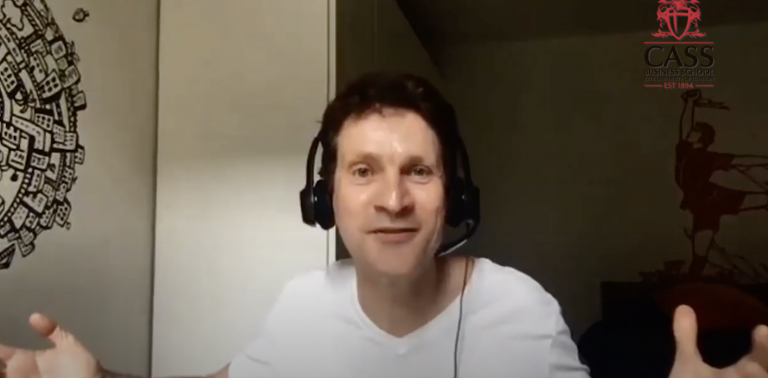
Professor Alan Felstead was one of the leads of the research and I asked him to explain the disappearance of workplace agency. Alan is emeritus professor at Cardiff University and lead researcher on the long-running Skills and Employment Survey.
He’s also one of the creators of the workplace quiz: How Good Is My Job.
Key topics
- Why workers have less control over how they do their jobs
- The link between task discretion and productivity
- How middle management can unintentionally block change
- Why formal employee-involvement programs don’t always work in practice
- How hybrid work affects productivity, flexibility, and working hours
- Why most people still find meaning in their work
- What managers can do to give employees a stronger voice
Notable quotes
“Give workers more control. They are the ones that will know how to improve their jobs.”
“People make the difference.”
“We need meaning in our lives, and one of the central meanings we get is from the world of work.”
Transcript
Bruce
Alan, thank you so much for joining me. I wonder if to kick off, you could just introduce who you are and what you do.
Alan Felstead
Well, my name is Alan Felstead. I’m an emetris professor at Cardiff University and I work in the Wales Institute of Social Research So social economic research and data. Gosh. short we shorten it to Wizard. we’ve not got pointy hats in i i in Wizard, but probably we have in many senses, I suppose, because I do kind of look at data an awful lot. I’m at Cardiff University and I lead the Skills and Employment Survey, which here’s been going on for donkeys years.
and and that’s what one of its great strengths is it’s the fact it’s been going on for so long. there are eight surveys in the series, and so we can look back over a long time period to see how the world of work has changed. And of course it’s changed an awful lot. and we can pinpoint where it’s changed and for whom it’s changed in what ways.
Bruce
It was the skills and employment survey that I first saw that put me onto your work. I guess the, as I understand it, it’s sort of done every few years. Is it six, every six or seven years? and so it just enables us to track some big things that changed. And probably the one thing that stood out for me was the, the fact that people reported a, that people reported a reducing amount of task discretion. So people reported a lot more, a lot less agency, a lot less autonomy in how they got their work done. And to kick off on that SES survey, I’d love you just to describe the extent of the change and then maybe give us a sense of why it changed.
Alan Felstead
right. I mean you’re right to pick out that change. There are many, many changes, but that’s one of the kind of most dramatic changes and it’s a change that’s been going on since the survey was carried out first in nineteen eighty-six. If you can remember back as far as that. I think that was the the year when Maradona scored a a goal with his hand and so forth. Some people might remember that. so it’s that far back. and we all kind of remember that now. Obviously, it’s kind of kind of folklore, I suppose.
so it goes as far as back as nineteen eighty-six, and there have been eight in the series, and I said, every five or six years. It depends on how successful we are at getting the funding to carry out this survey. and the most striking thing, it’s been going down and down and down and down and down. And we ask various questions about task discretion. So we ask about the extent to which people can decide what they do, when they do.
where they do it, to what extant what standard. So a a number of indicators. On all of those investigators, it’s been going down and down and down and down. And this is a bit of a a conundrum, really, because other evidence in the survey suggests that there’s a strong link between task discretion and productivity. And we all know people talk an awful lot, politicians talk an awful lot about productivity and the need for productivity to be enhanced. And we find a strong relationship between the more
task discretion people have, and the better the more productive they are at work. So that’s a real conundrum. Why is one task discretion going down? And yet productivity is going down as well. there’s an association therefore. and our kind of in a way call to employers is to give workers more control. They’re the ones after all that will know how to improve their jobs. They do it 24-7
they’re at the cutting edge, the coal face in some senses, not nowadays, we don’t have many coal mines, of course, but that sense that they all know how best to improve their job. So our call to employers is yes, people do make a difference. I saw that as a slogan, by the way, recently on a on a on a side of a factory. people make the difference. Well, yes, they do, and they should be made, should be allowed to make that difference because it’s good for
Alan Felstead
productivity and it’s good for their mental and health and well being. The the conundrum is why is task discretion going down and we can only speculate there. but one of the things I think might be going on is that middle managers may be unwilling to l let people kind of have their own say, let them have their heads in a way. and I think we see that as well with the resistance to the move to working at home, for example, P
Managers want to see people at work and don’t feel if they don’t see them at work they’re not working productively. And again, the evidence in the survey suggests yes, they are working productively when they’re at home. in fact, more productively than those who are working in offices.
Bruce
Yeah, because the longitudinal nature of the research gives us a brilliant ability to do a contrast point. And the thing I saw was that in 1992, 62 % of people said that they had task discretion in their jobs. They could do their jobs or they could do aspects of their jobs in the way they wanted. And now it’s 34%. So I love it because it’s down from two thirds a generation ago to one third now. I mean, it seems extraordinary.
Can we go into the specifics of what that looks like? Is that someone getting to their desk or getting to their workstation and knowing how they should do their job, what they should do? What does it look like when you look at the mechanics of that?
Alan Felstead
Well the mechanics is it’s we ask people to what extent they have influence over four aspects of their work. how they do their work, what they do, the standards to which they work, and forgive me I’ve forgotten if they forgot the fourth one, but there’s a fourth one. so the kind of the h as around what kind of at the workplace they’re able to do, kind of the extent to which they’re able to shape their own jobs. And and that’s been going down.
I think what we find as well, the real conundrum, is if you look at other aspects of what we might say is called employee involvement, like groups that meet together to talk about problem solving, because they’re often called quality circles, 1970s expression really, but they still do exist. they have been going up. so there’s a conundrum, some of the senses in which
People in the jobs themselves have less discretion, yet the mechanics seem to have been going up. So there seems to be a disconnect between the mechanisms that employers are putting in place and the actual actuality on the ground. And again, I think w the speculation is that middle managers might be the issue here. So senior managers might be implementing all these kind of practices, but they’re not percolating down to the
shop floor. and why is that it might be that middle managers are not actually taking notice and really giving employees on the ground their own heads. So I think that’s the thing I would say for people listening to this podcast, you might have got these mechanisms in place, mechanisms, but are they translating into practice on the ground? And our business suggests they’re not. And how might you resolve that as a middle manager? Well
Lots of organizations nowadays have attitude surveys. that’s great. so look at your attitude surveys. I would also urge people to look at other kind of innovative practices that my myself and a team have been involved in. Is we’ve launched what’s called how goodismyjob.com. It’s a quiz. how good is my job how goodismyjob.com. It’s a quiz, right?
Alan Felstead
I’ll say it again, how goodismyjob.com. That’s the third time I plugged that. But the point is it it it asks people a loads of questions. Well, it only asks 10 questions, not lots of qu it’s a quiz. It’s a quiz. It’s not a survey, it’s not a survey. The survey that we carry out takes over an hour to carry out. We ask lots of questions. A quiz, it is a quiz, a quiz, a quiz. So it’s short. And it’s directed at workers. So people on the shop floor who were invited to fill it in.
And compare their jobs to similar jobs. So I’m a university professor, so I’d put university professor in, I’d put I’d respond to all the questions, and it would give me at the end of it a spider graph along ten dimensions that positions my answers with similar people in the same kind of jobs as me, a university professor. but also we give another ring that that
positions people about the average jobs i i in in britain. So it’s a it’s a diagnostic tool for employees, workers generally, but it could be used by employers. So when you’re designing in the future your work attitude surveys or whatever, go and have a look at how goodismyjob.com quiz. Go and have a look at the questions on task discretion, right? And import them into into your
attitude surveys because you these are tried and tested questions that have been going on for 35 plus years. introduce them into your surveys. Also, you might want to use the howgoodismyjob.com quiz as a diagnostic tool. Get your workers to carry it out. we have done hackathons with employers where we get peop employees around the table to do it themselves.
you know, what was your job like? and also then to put themselves in the position of their their workers, just to get a sense of what people’s jobs are like. And it can be used as a as a kind of a tool within organizations to get a conversation going about various aspects of work, which include task discretion and a number of other issues which relate to job quality in general.
Bruce
And if you were sort of, you’ve mentioned along the way that letting people do the jobs in the way they want or letting them having the discretion to do that is one of the routes into productivity. Do you see that it’s also related to the engagement crisis that we often talk about, that, you know, these low employee engagement. Is this to you, are these sort of all part of a degree of system thinking that the ecology of work is broken because we’ve
We’ve disempowered people from the sort of small micro decisions about how they do their job. As a result of that, they feel checked out from it. They don’t feel like they’re achieving much in it. Are they all part of the same ecology really?
Alan Felstead
think so. I mean I think it is giving people their heads to empowering them empowering them a and the the evidence is striking in that regard. It’s interesting you’ve picked that out as one of the main findings and I I think it’s true and I as I it goes against the grain in terms of productivity when we see a link between those who have greater say at work and increased productivity. so I think it is unblocking that. And
For senior managers, and there might be senior managers listened to this, I think the question is, what are you doing in your organizations to give workers greater say? You might think you’re giving them greater say, but are you, genuinely? Are they having a greater say? are the mechanisms you’re putting in place making a difference? So look within your own organisations about task discretion and see how it’s changing. Has it changed?
Is it changing? Are these mechanisms you’re putting in place making a difference? and as I I think we think this it’s a survey we’re talking about at the moment, but there are ways in which we’ve tried to make this survey usable to the outside world and particularly employees and employers, and sh should I say trade unions? We’ve used the how goodismyjob dot com quiz with trade unions as well. there’s a whole host of issues.
that you can you can use that kind of vehicle to open up conversations, important conversations that as you as you kind of suggest, Bruce, I don’t think we’re having, and I don’t think are percolating down to the shop floor. And that’s where it matters. There’s a lot of talk up certainly in government circles about productivity and kind of big ticket items, I would say. the suggestion we’ve got is that it’s the small ticket items that matter most.
Alan Felstead
and these small ticket items extend across the economy and we’re not just picking winners, a few kind of sectors, which governments tend to do. We’re talking about a change across the board to empower all workers and get them greater get greater involvement because the evidence suggests it’s a win win situation.
Bruce
I this research, this sort of task discretion work a couple of months ago somewhere. And as a result of it, ever since I’ve been exposed to normally customer facing, normally when I’ve been dealing interacting with someone and they’ve said no to me or the person has, the person I’ve been dealing with has expressed gentle and private empathy, but has told me they’re not allowed to do something like this. I’ve been sort of really aware of it because these are the ways.
that sometimes we witnessed this in the wilds that we’re, I was trying to get a delivery of something and someone told me that they couldn’t do it and they had to cancel it and start again. And it was pretty evident that the person on the receiving end of dealing with this thought this was a banana system, but it’s the rules. And so I was just using my own experiences to try and interpret why we got here. And I guess the way that I, the thing I ended up with is that
there’s a sense of regulation or there’s a sense of sort of Overwatch that might be employers trying to increase the intensity of work, creating more rules for people and more regulations, or it might be that there’s some sort of safeguarding that’s being created by an employer to either avoid stock leakage or to avoid sort of bad experience. Is that right? Are we over regulating work? And this is the downside of that.
Alan Felstead
I think we are over regulating, but I mean I I would say some of the regulations that are coming in from the new Labour government are actually pitched at giving workers greater voice. you know, the new Workers’ Rights Act is actually, I think, more empowering. So regulation can be empowering b by government as well as disempowering. I I I th I I think if
Bruce
I was more thinking sort of rules by employers, but yes.
Alan Felstead
Yeah, I I I think you’re right. I mean, I think what was striking as well about the survey, remember it’s a survey and so it basically it’s an asking a number of statements. Often we ask statements and to what extent people disagree or agree, those kinds of things. That’s the the nature of it. So it is kind of I would say quite a tick box exercise, the survey that i that but we do get we get a lot of data. but we do ask some open ended questions. And the open ended questions are absolutely fascinating.
So one question we ask is an open-ended question of what would you do to increase your own productivity? And we let people say, and it’s amazing what they say, they come up with a minutiae of detail that of course in a survey we can’t capture, but a wealth of ideas. They’re all they’re very specific to all the their sector, their job and so forth, but it’s a wealth of ideas. It’s just mind-blowing.
Again, that suggests there are ideas out there. Let’s capture them. Are they being captured? And I think my sense is they’re not. we also ask, again, talking about the quiz here, we ask at the end of the quiz ha what people think of their own jobs, right? So instead of putting them on a s spider graph and asking them a series of questions, we say, What do you think of your job? How good is your job? And they come up again with a wealth.
sometimes it’s an essay. Remember this is this is typed in, usually on the phone. And some people vent hugely. So again, that suggested suggests to me that when people are asked even in a quiz or a survey and given a chance to input, they’re more than happy to input. And as I say, often they input a lot. and that that’s probably one of my regrets about carrying out surveys is that when I’m there, ’cause I
Company survey researchers. So I go into people’s homes, only a few, obviously, because there are we do with five and a half thousand interviews, for heaven’s sake. But you get a sense of being sitting in someone’s living room and they’re going through a series of questions for an hour. people are very happy to talk about their jobs. in fact, they talk about their jobs over the questions, because people’s jobs, of course, are are are very interesting to them. They’re it’s
Alan Felstead
often people aren’t talked people don’t talk about their jobs for an hour to some strange person. but a lot of the questions trigger detail about the jobs and but certainly in the productivity one we we actually try to kind of capture that by interviewers writing it down in the survey we actually ask people to write it down. So it it just says suggests to me that when people are asked these questions, they’re more than happy to suggest things.
Bruce
It’s really interesting that isn’t it? Because I think in that study, it says that three quarters of people believe that their jobs are useful, that they serve a purpose in the world, that, you know, they’re not just these bullshit jobs. People don’t think they’re going to work to do something useless. And yet, and you describe there, you know, the very fact that people, when they’re asked, fill in a lot of detail of how they do their job better suggests that they’re not asked it very often. Right? Because if you’ve answered this, if you’ve answered this 50 times, You you just get checked out and you don’t do it. And so, and so.. And it makes me optimistic that the solution, there’s a solution there because people see their jobs as valuable. They’re invested in trying to think of ways to improve it. But then if you ask them, are you allowed to do the job in the way you want? Most of them say, no, I’m not. And so it feels like the productivity crisis that we’re dealing with has got an answer in giving workers a voice. And I’ve seen you talk about the importance of workers having a voice. Do you want to just sort of elaborate on.
how you would you would do that.
Alan Felstead
Well, as I say, I think it’s more about i it’s actually addressing the task discretion crisis, I suppose. you might say. That that is a crisis that it strikes, is very striking. and it extends to other issues like allowing people the ability to choose where to work. evidence in the i i in the data suggests that that’s makes people more productive, not less productive.
despite all the hullabaloo we often hear about kind of return to the office movements and so forth. I I I would also say as well, certainly in with regard to the working at home issue, one of the I think striking findings, which we know little about, is where within the home people work when they do work at home. That has a material difference on productivity. So I look slight
Bruce, I think you might be in your own home. I’m not quite sure. You can tell that I’m in my own home again. Tell, look at this. it’s a converted bedroom. I’m upstairs, it’s a converted bedroom. Kind of probably does it look like an office? I’m not sure. No, we’ve got a blind there. It probably doesn’t look does it look like an office, Bruce? I’m not sure. Does it? Could be a university office, but it’s not. It’s a bedroom. this makes a big difference if you’ve got a door that you can shut. makes a big difference to your productivity. Obvious reasons if you’re on the kitchen table.
You’re interrupted a lot of the time. You might have kids kids are interrupting you and so forth. Same with the lounge. that has a big difference. So do employers know where people are working when they work at home? Question. not sure. probably they should. and kind of the ability to to have have a home office is is very productive. It makes people more productive because they can shut the world of the home away by means of a door.
And of course this this affects people in different ways. It’s gendered. Women are less likely to have a home office than men. So there are a whole host of kind of productivity issues there that need to be explored. Explored.
Bruce
Yeah, I saw you talking about that and you said that firstly, the trend for home working was already well established before COVID. I wanted to sort of link up a couple of the pieces of work that you’ve done. You did some work about work intensification and you’ve worked tracking that over time. One thing I noticed though, that when I was looking in the data of work intensification, the most recent version of it, I think was 2022, it reported work intensification had dropped a little.
So like how busy people feel, how intense people, and I wondered what the cause of that was and whether that was some degree of shift home working and allow work intensification or to decline or whether those two things weren’t related.
Alan Felstead
Well, it’s interesting that. i in in a way the ability to work at home
Can make more work intense or can make it w work it less intense. you know, there’s a kind of there’s positives and negatives there. what it tends to do working at home, it tends to elongate the working t your working time, basically. you might work early in the morning, you might work late at night. but the evidence suggests that actually it reduces work intensity because you’re able to spread it out, kind of doing a number of things at the same time. So you might work.
longer. So there’s a there’s a sense in which it elongates your working day but actually reduces work intensity because you’re not under that kind of nine to five pressure. so you know but at the same time you’re working longer you might be working less intense. I think that’s the way I’d I’d explain it.
Bruce
Yeah, I’ve just seen even people with intense jobs, I’ve seen people describing their Fridays as something as a pressure, a pressure release. They don’t necessarily feel like they’re as broken by the weekend as they might have been when they were in an office environment. And it’s just an interesting thing for me that actually to some extent, hybrid working does seem to have been something of a of a balm on work intensity. And I was just…
As you studied that, was interesting in your perspective.
Alan Felstead
Yeah, I mean I think well I think hybrid working is here to stay despite the return to the office issues because it’s hybrid working. I mean the idea you’re getting the benefit of both worlds, as you explained, Bruce, there the intensity of working in the office and then the kind of downtime of of actually having having a breather, I suppose, to some extent and catching up on various things on on a Friday or even of course a Monday because the extended working extended
weekend that people often ha have nowadays. But as you as you said at the beginning there, Bruce, I think one of the interesting things about the long term trend is that obviously there’s a massive interest in working at home during COVID for obvious reasons. People couldn’t come out to work and people were encouraged to work at home by governments across the world. and obviously there’s massive interest in in working at home. But it’s a
trend that’s been going on way, way, way before COVID. you know, COVID has accelerated it. Yes, absolutely. But it it’s not been the trigger at all. It’s been going on for a long, long, long time. And one of the other striking things I think about the survey is that the decline of the traditional workplace has gone down and down and down and down, down. I think again from the if I’m memory correct sixty four percent to thirty-eight percent work in a single
workplace. That’s another striking finder alongside the task discretion finding, you know, of a long term trend. If you’re looking at long term trends, it’s been going on the the downward direction. and not just about COVID. It’s a long term trend that is here to stay and I I can’t see it going away anytime soon at all. And of course the Employment Rights Bill Act now of course it’s now is kind of cements that trend.
the current government’s clearly very much in in favour of giving employees the ability to choose where they work as well as the other issues we talked about, because where people work is another aspect of discretion. as long as they get the job done, do we really are we really bothered where people are working? We shouldn’t be. We might be bothered, I th as I say, a little footnote on that, about where within the house they might be working, given the the effects that might have on productivity and their well being.
Bruce
Can ask you about one of the other themes that sort of is very much related to the contemporary world of work and that’s job displacement and sort of how AI is impacting jobs, hiring. Can you give me sort of a perspective of someone who thinks about these things? What’s the current state of play and how do you see it evolving? Yeah.
Alan Felstead
Whoa, current state of play. Gosh, current state of play. I mean, remember this server was carried out in twenty twenty four. And it was carried out over a number of months you know, in twenty twenty three and twenty twenty four. I mean, we saw the effect of AI during the data collection period. absolute yeah, exactly. I mean, but so it’s early days and we even saw it during the, you know, nine months or so of data collection.
Alan Felstead
When we’re asking people about the extent to which they use AI. It was increasing then. I mean but that was twenty twenty four. We’re now in twenty twenty six, nearly going into twenty twenty seven, not too far away. I mean, that’s just mind blowing really. we all our evidence, of course, is almost before the AI revolution really started. so we’re still at early doors there. And well, who knows, to be honest, Bruce? I mean, I think that’s
Alan Felstead
Yeah, you know, million dollar question. I I I just think it’s a massive question. I I I mean you know, there’s so much so much discussion on that. I mean it’s it’s still evolving. It’s so so rapid.
So rapidly that it it it’s very difficult to say where it might go, I would say that. So difficult to say, I think.
Bruce
I guess sort of my final question then is just related to in the context of that uncertainty, the role that work plays in people’s lives. I think the thing I see through all of your work is that people get meaning from their lives, from people get meaning from their jobs in no matter what they are. And so going to a world where our relationship with work might be somewhat different.
There seems to be something in society thinking about how that meaning can be provided.
Alan Felstead
I I again I think that’s that’s that’s absolutely true. I mean the one of the other striking findings that you mentioned earlier was that there’s a lot of discussion about bullshit jobs. you know, the fact that jobs don’t have meaning, and there’s a whole whole literature on bullshit jobs. We just don’t find it. you know, only five percent of our sample would be classified as in bullshit jobs. They all find meaning,
in in their jobs. So job jobs are very meaningful for people. They’re important parts of their lives. There will be important parts of their lives post AI as well. I’m sure everybody will have jobs. I mean, but the jobs might be different, but I’m sure we’ll have jobs. We need meaning in in in our lives and and lives. And one of the meanings, central meanings we get is from the world of work. Either our kind of data supports that.
What would be interesting it would be to see how meaningfulness changes over time. And the meaningfulness questions were only asked for the first time in 2024. So how they track over time, that will be interesting. How they track related to AI will be interesting. So watch this space, I would say, on that. We don’t quite know. But what is the relationship? Actually, in the discussion, I haven’t really heard much about that that kind of
link between meaningfulness and and AI, but because there’s not a lot of evidence. but as I say, in terms of tracking and the great strength of the surveys is the tracking ability. they’re a unique. I don’t think there don’t think there’s any other survey in the UK that does this. I haven’t heard any. Across the world in in fact, over such a long period of time.
And also I I would say about the survey, well, people who listen to might think, well, well, the survey is a survey is a survey. There are many out there. I would say this survey is gold standard. why is it gold standard? It’s carried out to scientific standards, random probability sampling. It’s very expensive to carry out. It’s not a kind of clipboard in the street affair, it’s random probability sampling where we randomly select people houses.
Alan Felstead (34:26.803)
households to interview. There’s an awful lot of what’s called dead wood. Not everybody is interviewed. Not all houses have people working in them, for example. so you can imagine a lot of kind of effort i is gone to to actually interviewing people. So it is gold standard. Also the other aspect of the gold standard nature of it is that it’s got support from government. So we have part contributions from ACAS, the department
For education in England and also in Northern Ireland. so we we have contributions from a number of key stakeholders, including the ESRC, who are the main funders of the survey. That’s the an academic research body. But so it’s got buy in from a number of key players and it and it’s robust and well respected. So
i its results are kind of I think I’m gonna use the word meaningful, hopefully.
Bruce
It’s interesting, it? Because the moment you say that only 5 % of people say that their job feels worthless, bullshit, you immediately think, okay, follow-up question, tell me about your relationship with your manager. Because it begs the immediate question then, is it, do they objectively see their job as having no value? Or do they just not feel seen by their manager? Do they just feel unimportant to the organization they’re in? It’s a small enough number that that feels like a follow up that’d be fascinating. can understand how you find it intriguing to go on these interviews
Alan Felstead
Well, pr pro yeah, the f the five percent. That’s an interesting one. But it’s it’s only one in twenty. It’s still five percent. But yes, I mean I think I think that’s the problem the the kind of frustration I I find, because I’m a person that does quantitative and qualitative work. I must admit the frustration I have is that when I’m there listening to people responding to questions. the frustration I have is your question really, Bruce, why do you say that? Tell me more about that
Alan Felstead
But in a kind of survey situation, it’s a bit kind of you don’t have that latitude to have that follow-up. but that’s the qualitative follow-up that you want to find out. Well, why did you say that? And have a discussion about the kind of nuts and bolts of that. Obviously, that would take an eternity to do, and we we just don’t have the time. So there is this issue about collecting a lot of data in an hour, but it is rat a bit rat. and w when
You’re there listening, people often talk over, they give a narrative. They tell you over the questions, why that is. But as quantitative researchers don’t really collect that data. So there’s this frustration I have personally between a being a quantitative researcher and then I hear the kind of explanations actually. And we don’t really collect it. The only way the only time we collect it is when we have what’s called open-ended questions. So the and we don’t have many of them.
because they’re expensive to col to type basically to collect. but looking forward, I mean this is where the AI will come in, when we’ve got a whole batch of which we have of qualitative answers to the productivity question, for example, in the survey, and what do people think of their own jobs in the howgoodismyjob.com quiz, we can actually rattle that through an AI. We actually we actually can use we can use AI.
Alan Felstead
Interpret some of those answers, some of those qualitative answers, you know, these raft of answers, the the kind of extensive almost essays that people have have written or talked about. so that that’s quite tantalizing. We can use AI to to analyse the results.
Bruce
It really strikes me that if anyone’s listening to this, it’s a manager’s listening to this or a boss is listening to this and they’re thinking, well, okay, this is intriguing. It feels like there’s applications directly for them in their own jobs. You know, that idea of asking your team to tell you the frustration of their job, how they would do their job better. Maybe just giving them a voice to talk about those things, using the employee input as the route to improving productivity.
strikes me as a very easy way to try and get some dividend from the experience that employees have gathered.
Alan Felstead
Absolutely. I mean, that’s the main message I think of hopefully this podcast would be there are ways to do that. you know, I I’m just talking about research, which is, you know, what’s has happened in the past. All this is past, of course. what kind of are are the trends. But I think within it there are messages. and the messages relate to, you know, give employees greater voice, listening to them more, using various techniques to
to to open up that discussion. to maybe challenge milli middle managers. are they giving their employees greater say I think employers can monitor this more themselves. There are, you know, say they often organizations have attitude surveys. They can use questions that we have used in our survey which as say are available on the howgoodismyjob.com quiz.
they can use that device which is freely available, no charge at all. just to open up a discussion. And and I say we in hackathons, employers have done that. And if there are consultants out there as well who are listening to this, it’s just amazing little little tool, I think, to have in your kit bag. this this tool to open up a discussion in a in a kind of non-confrontational way.
The employees won’t see the answers unless employees are willing to share the answers. but you could have a group, which we’ve had in hackathons, where people fill in their answers and show their screens and show their spider graph. so you could have you could easily do that, which we have done in hackathons, where get people with their own iPads. And if people are willing to share their their responses, great. And you know, maybe the end of it say
Ask them to f ask in what ways they might be able to prove their jobs anonymously. I mean it all of these things are tools in the same way that we started off with, Bruce, which is about just kind of giving people greater voice, task discretion. There are tools out there and I think we’re trying to provide some of those tools, and hopefully I’ve given some kind of ideas as as to how that might happen within organisations.
Bruce
Well, I’ve given a link to howgoodismyjob.com in the show notes and I’m intrigued to hear if anyone actually gives that a go and experiments with that. And I’m so immensely grateful for the time you’ve taken to talk to us today. Thank you so much.